

Playing Blue Wizard Slot entails engaging with software built on strict mathematical rules https://bluewizard.eu.com/. Behind the eye-catching graphics and magical theme lies a system governed by probability and a key figure called Return to Player (RTP). This piece describes the maths inside Blue Wizard Slot. We’ll look past the surface magic to understand how its random number generator, volatility, hit frequency, and bonus odds determine what you can count on over thousands of spins. We’re not attempting to predict your next win—that’s always random. Instead, we aim to provide you with a clear picture of how the game behaves. With this, you can form sensible expectations, handle your money more wisely, and appreciate the clever design choices for what they are. Everything here is derived from public data and standard slot maths for this game.
The Heart of Luck: Random Number Generators and Integrity
Blue Wizard Slot runs on a verified Random Number Generator (RNG). Consider this algorithm as a system that produces random numbers constantly, thousands every second. Each number connects with a specific set of symbols on the reels. The second you hit spin, the game fetches the latest number from that sequence and employs it to set your reels. This ensures every spin a independent event. It’s random and just, with no link to what happened before or what comes next. The RNG is the cornerstone of odds in any reputable online slot. It makes sure the stated maths actually represent what happens when you play. Independent testing labs and regulators examine these RNGs regularly to validate they are truly random. So, any discussion about chance in Blue Wizard Slot has to start with one fact: outcomes are entirely random, based on how the symbols are arranged across the reels. You can’t find patterns. A big win is never “due.” The game runs on genuine chance.
Examining Symbol Combinations and Paytable Chances
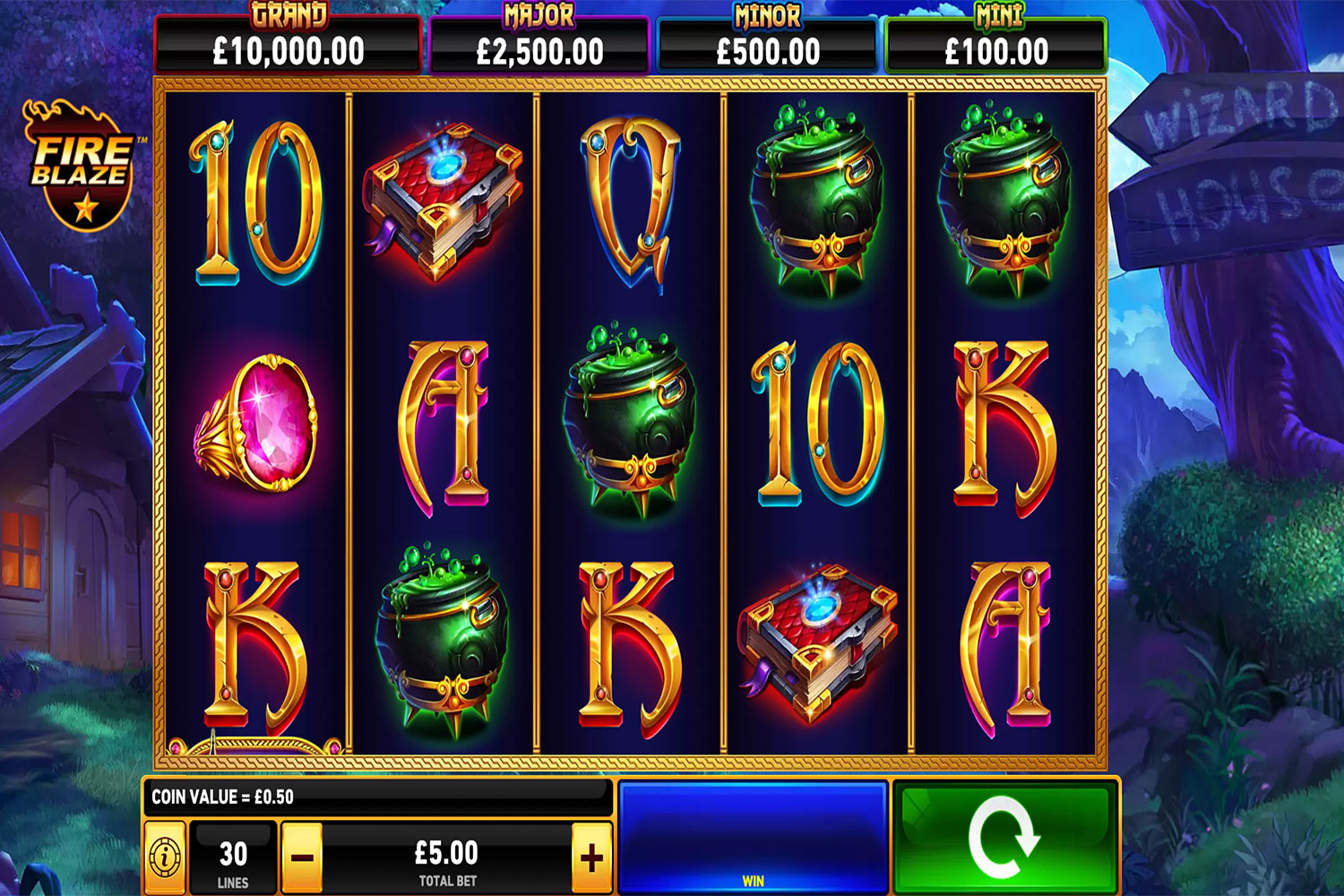
The paytable for Blue Wizard Slot is more than a prize list. It’s a direct look into the game’s weighted probability system. Each symbol has a fixed number of positions on each reel strip. The chance of a certain combination landing is the product of the odds for that symbol appearing on each required reel. For example, the highest-paying standard symbol (probably the Wizard) will have far fewer copies on the reels compared to the lower-paying card symbols. This scarcity makes its big combinations infrequent. We can see how each symbol type adds to the game’s maths:
- Low-Pay Symbols (Card Suits): These have the greatest chance of appearing. They create common small wins that help sustain your balance, but they contribute minimally to the long-term RTP.
- High-Pay Symbols (Theme Characters): These show up more rarely. Their payouts are larger, so they add considerably to the RTP when they hit. Their lower probability is what increases the volatility.
- Wild Symbols: They usually stand in for others, enhancing the chance of making a winning line. A line of wilds often rewards the most, but the odds of that happening are quite rare.
- Scatter Symbols: Their probability is set independently, as they typically need to land in a certain, non-linear way (like 3 or more anywhere) to start bonus rounds.
The Mathematics of Bonus Rounds and Free Spins
Special rounds and free spins are the area where a volatile slot like Blue Wizard Slot frequently concentrates its anticipated value. The probability of initiating the bonus spins feature, commonly by hitting three or more scatters, is a predetermined, pre-set number. This may be around 1 in 200 spins or even more uncommon, which underlines the game’s unpredictable nature. Once the bonus feature starts, the maths often change. The bonus spins may use a varied reel set or feature unique features such as expanding wilds or multipliers. This new condition has its own internal RTP and fluctuation, generally more elevated than the main game. That’s why these features are so coveted. The largest payouts exist here. Imagine a bonus spins feature with a win multiplier that grows with each win. The allocation of outcomes tilts towards the chance of one massively rewarding sequence. The slot’s combined expected value merges the minimal probability of accessing the bonus round with the substantial average payout you receive from it. This creates a “lumpy” return pattern, the trademark of a high-volatility slot.
Win Frequency and the Likelihood of a Successful Spin
Hit frequency correlates with volatility. It represents the proportion of spins that result in any return at all, even if it amounts to a fraction of your stake. A high hit frequency game might pay out on 40-50% of turns. A lower one might sit in the 20-30% bracket. Blue Wizard Slot, aligning with its characteristics, likely has a hit frequency near the weaker end. This gives you the fundamental chances of getting a payout on any given spin. Keep in mind, this encompasses every type of payout. It differs from the likelihood of activating a bonus or landing a premium jackpot. The machine’s designers determine the hit frequency by deciding how many high-value icons, basic icons, and empty spots appear on each digital reel. A lower hit frequency is a intentional trade-off. The funds not rewarded on frequent minor wins is gathered to fund those rarer, but far greater, prizes. So, players should anticipate many spins to result in no payout. That’s a typical part of the machine’s chance configuration.
Explaining Return to Player (RTP) and Its Long-Term Meaning
The Return to Player (RTP) is a calculated percentage. It reveals the anticipated amount of all wagered money the slot will pay back over a extensive time, often across millions of spins. Let’s say Blue Wizard Slot has an RTP of 96.2%. Mathematically speaking, for every £100 staked, it should return £96.20 over its lifetime. Don’t mistake this for a short-term promise. In one sitting, you could get back much more or, more likely, much less than that. The RTP only evens out over the game’s entire existence and across all players. Developers bake this number into the game by adjusting how often each symbol appears. A higher RTP usually means a smaller benefit for the casino. But RTP alone doesn’t tell you about the game’s pace. Two slots with the same RTP can feel completely different. One might hand out small wins often. Another, like Blue Wizard Slot, might pay less frequently but in bigger chunks when bonuses hit. Both can still reach the same RTP in the end.
Fluctuation and Dispersion: The Rhythm of Victories and Drawdowns
Risk level, or volatility, defines a slot’s danger and reward schedule. It shows how regularly and how large wins will be compared to your wager. Blue Wizard Slot is typically a mid-to-high volatility game. The structure means you’ll see less frequent winning spins on average. But the wins that actually hit have the potential to be significantly bigger than your wager. This increased variance leads to bigger swings in your bankroll. You’ll endure stretches of defeats or small payouts, waiting for the more rewarding lineups or bonus features to hit. Measure this to a low volatility slot, which offers frequent, modest payouts for a smoother, less bumpy ride. Understanding this is crucial for your tactics. To play Blue Wizard Slot successfully, you require a bankroll that can survive the lean stretches while you bide your time for those larger payouts. It’s a game that appreciates endurance. The theoretical outcome plays out through sporadic large payouts, not a steady trickle of spins.
Strategic Implications and Responsible Play
Understanding the maths of Blue Wizard Slot can inform a tactical and safe way to play it. Understanding it’s high-volatility must guide your bankroll management. Establish a session budget that can withstand a potentially long run of losing spins without encouraging you to chase losses. Bet sizing matters. Since you require those larger wins to approach the theoretical RTP, your bets need to be small enough to enable you to spin enough times to see those winning cycles. Pushing for a bonus is a waste of effort statistically, since every spin is unrelated. A disciplined, budget-conscious style matches the mathematical reality. Here’s the key strategic takeaway: no tactic can defeat the house edge or anticipate the RNG. The maths guarantee that over a extended period, the casino holds onto its percentage. So, the best use of this knowledge is to support responsible play. Set limits. See your wagers as the price of entertainment. Appreciate the excitement within the clear framework of understood probabilities. This is how you find the real “magic” in Blue Wizard Slot.
Common Queries on Slot Probability

Let’s tie things together by responding to some typical questions players pose about the maths behind slots like Blue Wizard Slot.
How exactly are the odds calculated for particular jackpot wins?
The odds for a particular combination, like a full screen of the top symbol or a mega win in the bonus, come from multiplying the probability of each needed symbol landing on its designated reel position. For a five-reel slot, that’s the chance of Symbol A on Reel 1 times the chance of Symbol A on Reel 2, and so on. These probabilities are based on the number of reel stops given to that symbol versus the total stops. For the absolute top jackpot, this probability is extremely small, often around 1 in several million spins. That’s how the game can offer such huge payouts while still hitting its overall RTP target.
Does the RTP vary based on my bet size or chosen features?
In most modern online slots, Blue Wizard Slot included, the RTP is fixed. It stays the same if you adjust your coin value or bet level. The whole mathematical model scales with your stake; a win is normally a multiple of your total bet. Still, it’s wise to check the game rules. Some slots offer optional “side bets” or feature buy-ins that might carry a different RTP from the core game. The advertised base game RTP applies to standard spins across all normal bet sizes.
Can probability be used to time when to play or to trigger a bonus?
Not at all. This is a common misunderstanding. Because the game uses a true RNG and every spin is unrelated, there is no sequence, cycle, or ideal time that determines the result. Each spin is a fresh event with the same fixed odds as the last one. The idea that a bonus is “due” after a long losing streak is called the gambler’s fallacy. It’s logically wrong. The probability of triggering the bonus on your next spin stays precisely the same, no matter what happened on the previous spins.
Our examination under the hood shows Blue Wizard Slot is a carefully calculated entertainment product. The mesmerizing visuals rest on a firm base of probability and statistical expectation. The combination of RTP, high volatility, and feature-heavy payouts creates a distinct experience built on expectation and the chance for big rewards. This is offset by the inevitability of randomness and a built-in house edge. When you understand these ideas—the RNG’s role, what RTP really means long-term, and how volatility works—you can play with more insight. This awareness encourages smarter, more responsible play. Your decisions come from mathematics, not myths. You can appreciate the spectacle for what it is, knowing exactly how chance shapes the game.
